

Smuts Has Smalti
A junk man and the strange provenance of gold.

Back before The Ruins, in the days of city living that held a different kind of freedom, I fell into a pile of smalti that changed my life.
The freedom I speak of was freedom from the burden of purpose. Now that I carry that burden, I understand its weight. But back then, in the days of wild creative spirit without too much form, I hopped from beautiful project to beautiful project without too much care for next year.
Let me set the stage for you.
We were deep into the renovation of a tiny brick house in Beechview, an urban suburb of Pittsburgh. No, not this house. Another one. The house sat at the very top of one of Pittsburgh’s famous steep hills, yellow brick and squat, with a façade that looked, at least in my imagination, a little like The Alamo. I named it The Fort.
I bought it much like I bought The Ruins, with cash and a song humming in my heart.
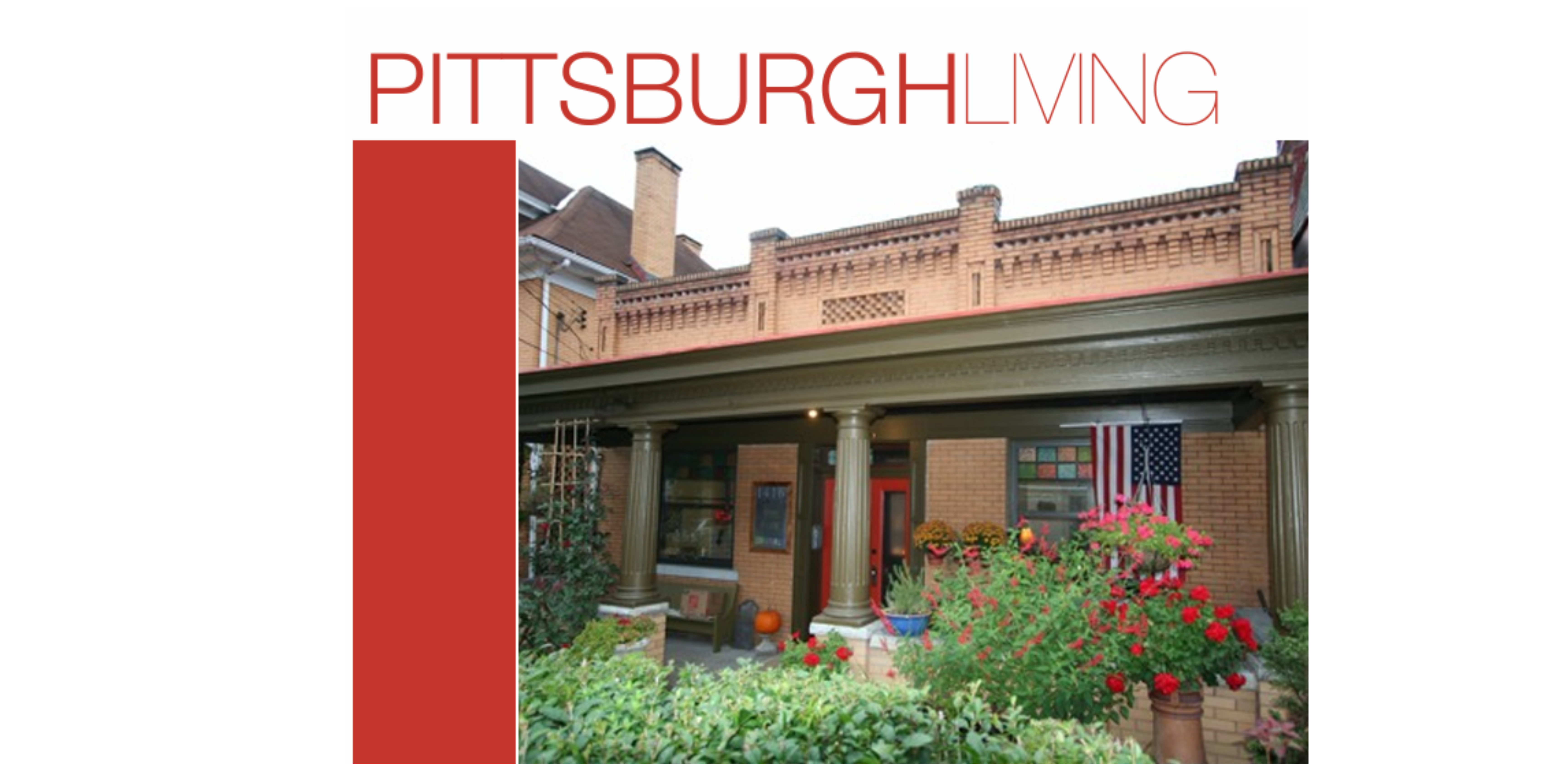
I had no intention of flipping The Fort, although I only stayed there for just over a year, which in real estate language, is a flip. I can drum up nostalgia for this tiny gem at will. Today, I dug back into old photos and found myself remembering the pull toward deep earthy green paint, and the boldness I felt when I chose the hot orange front door. Its postage-stamp front yard, wild and overgrown when I arrived, was a joy to wrangle into order and color.
The Fort was a playhouse for design. It had the great bones of houses built in the first decade of the twentieth century and was just small enough to feel like a game. It was a shotgun-style house, named for an act I have never witnessed but remain intrigued by: opening the front door and shooting a gun clear down the hallway through to the back porch.
I was divorcing my second husband
Looking back now, in awe, at how it played out, I am humbled by how certain years shape the future. Eddie, my soon-to-be ex-husband, helped me renovate it. For months, he arrived at 9 a.m. with tools and skills to solve its biggest problems. The day he brought in his junk man was the day I fell into my pile of smalti.
Eddie had been telling me about a man named Smuts for years, building him up through colorful demolition stories until he had become almost mythical to me. So when Eddie announced that morning that he was calling Chris Smuts to do the big cleanout, I was thrilled.
As I followed Chris around the backyard, pointing to old tires and debris, he never stopped moving or talking. High energy guy. He walked by my hammer and hardie log, the original one made of cherry from my grandfather’s farm, and said offhandedly, “Is that an anvil?”
I looked at him in surprise and said, “That’s exactly what it is.”
He asked about mosaic and then offered that he had a bunch of mosaic glass stored away from an older job. Was I interested?
I figured it might be stained glass or vitreous tile and, having already crossed the threshold into mosaic material snobbery, I doubted I was interested.
Then he pulled out his phone, looked through his pictures, and came up with a photo of a stack of what was clearly Italian smalti.
I was shocked and overcome with immediate coveting.
Smalti, as you may know, never gets old, never goes out of style, and holds its value forever.
I walked around to the front of The Fort and broke my silent treatment with Eddie. We had been avoiding speaking that day as we worked.
“Smuts has smalti!”
Three words that might only be understood between the two of us.
Eddie understood the value of smalti to me. He understood the oddness of Chris Smuts having it. He understood, more importantly, the miracle of Chris being willing to sell it to me.
His first response was, “How much is there and how much does he want for it?”
He bought it all, sight unseen, on the front porch of The Fort for $200. No haggling, no doubt, just a done deal in a few seconds.
Even at the end of us, he knew exactly what had just appeared in front of me.
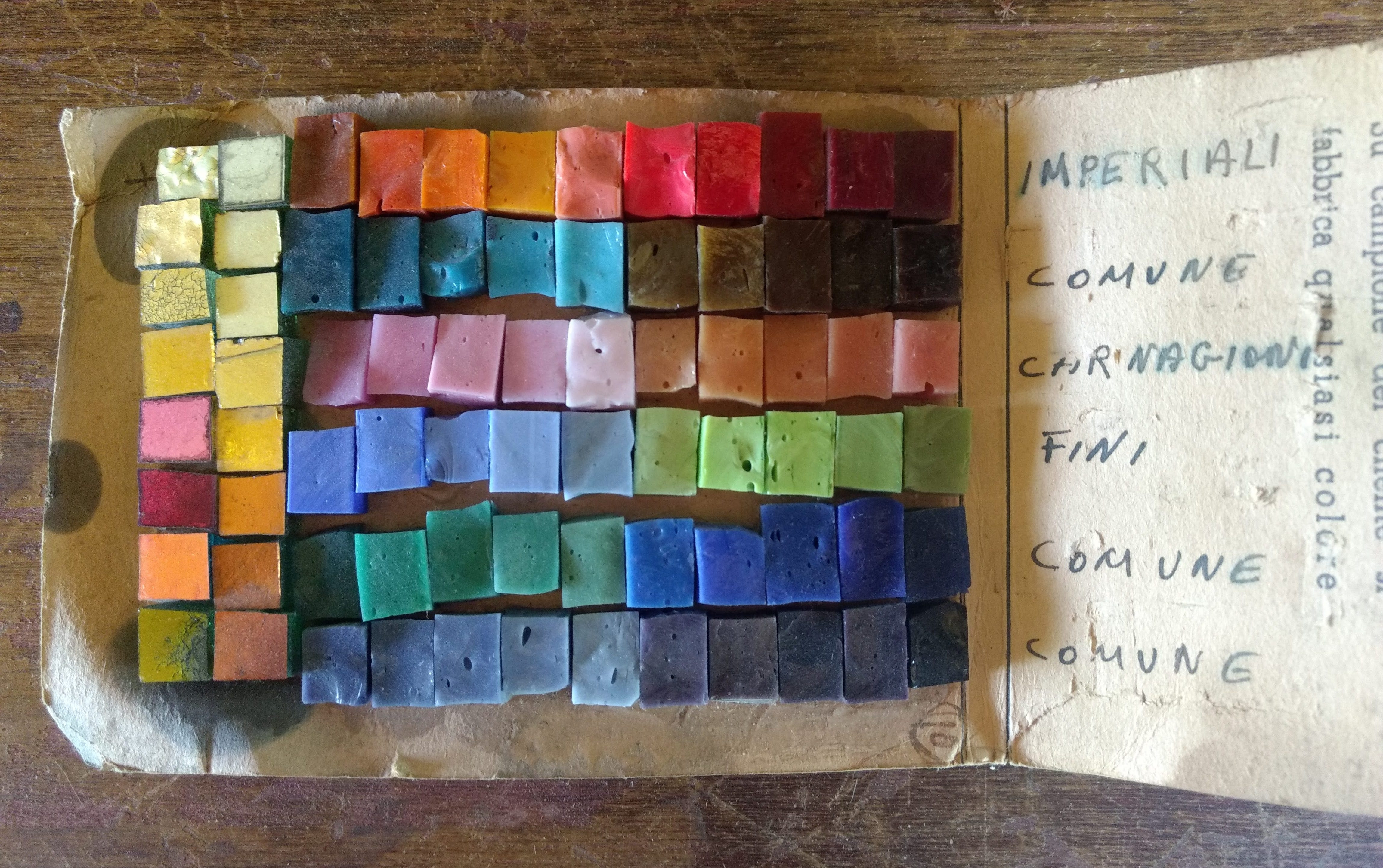
The next day, Chris dropped off stacks of old wooden boxes filled with more smalti than I had ever seen in one place, all wrapped carefully in Italian newspaper from the 1950s.
Color mixes that screamed mid-century modern. Bright yellow and cobalt blue in one container. Bright white and grass green in another. But the box that made me hold my breath was the gold.
Four-inch squares of 24-karat gold smalti, stacked. Yellow gold, silver gold, bumpy gold. All the gold.
The sight of that much gold did something old and slightly embarrassing to me. I felt the dragon in me.
Later, during my short-lived Fort time, I invited girlfriends over for smalti-sorting parties. We would dump one whole container out on the table and separate the colors, then wash it all and repackage it into my chosen storage system of glass mason jars. A highly satisfying experience.
That’s when I first heard the name Virgil Cantini.
At first, he was only a name attached to the boxes. Later, I learned his significance to the history of Pittsburgh art.
Virgil Cantini understood something Pittsburgh keeps forgetting and relearning: art does not have to be precious to be serious. Born in Italy and rooted in Pittsburgh, he spent his life placing modern art inside the working body of the city: campuses, courtrooms, lobbies, tunnels, stations.
His 1964 Bigelow Boulevard mosaic was a passage mosaic, meant to be experienced by people walking through the city. Twenty-eight abstract panels of cast concrete and glass tile turned a pedestrian underpass into a bright, subterranean cityscape. When redevelopment nearly buried it, Pittsburghers fought to save it. Its reinstallation at Steel Plaza is one of those rare Pittsburgh stories where the old thing was not only mourned, but saved
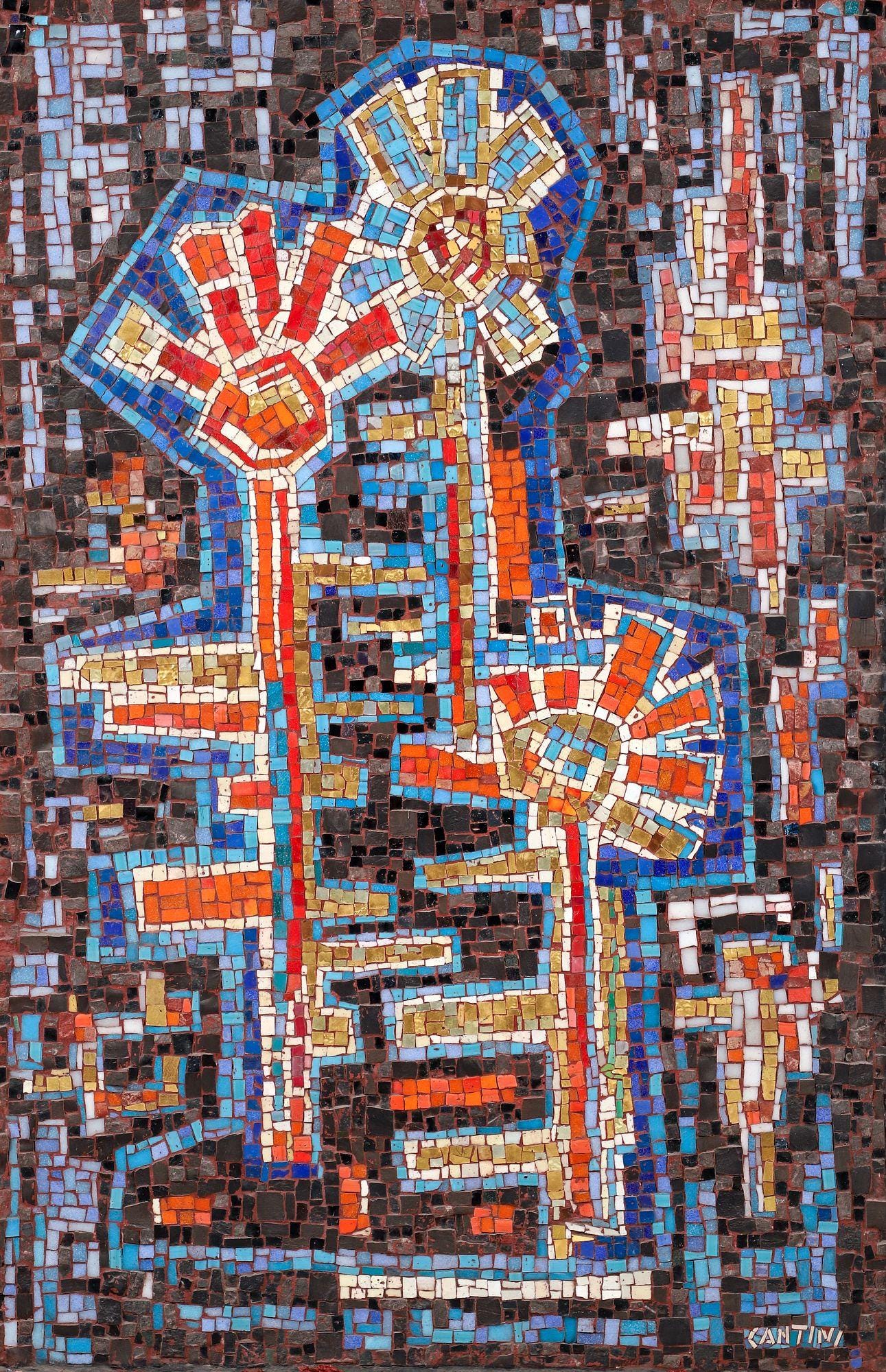
Chris explained that he had done the cleanout for Virgil’s family after Cantini died in 2009 at the age of 90. The portion of smalti he cleared out sat waiting until the day another mosaic artist identified it, put a value on it, and gave it a new story.
From an Italian factory to Virgil Cantini’s studio, from Smuts’ storage to my short stint at The Fort, and finally to the walls of an abandoned coal mine in Fayette County, this cache of smalti has always been treasured.
This is where I think of Rule #2 of The Ruins: Build Relationships with Raw Material.
People often hear that and think I mean stone, glass, shale, coal, clay. I do mean those things. But raw material is never only raw material once it has passed through human hands. It carries the factory that made it, the artist who saved it, the junk man who recognized that it might still matter, the ex-husband who understood its value in a difficult moment, the friends who sorted it by color at the kitchen table, and the walls that eventually made room for it.
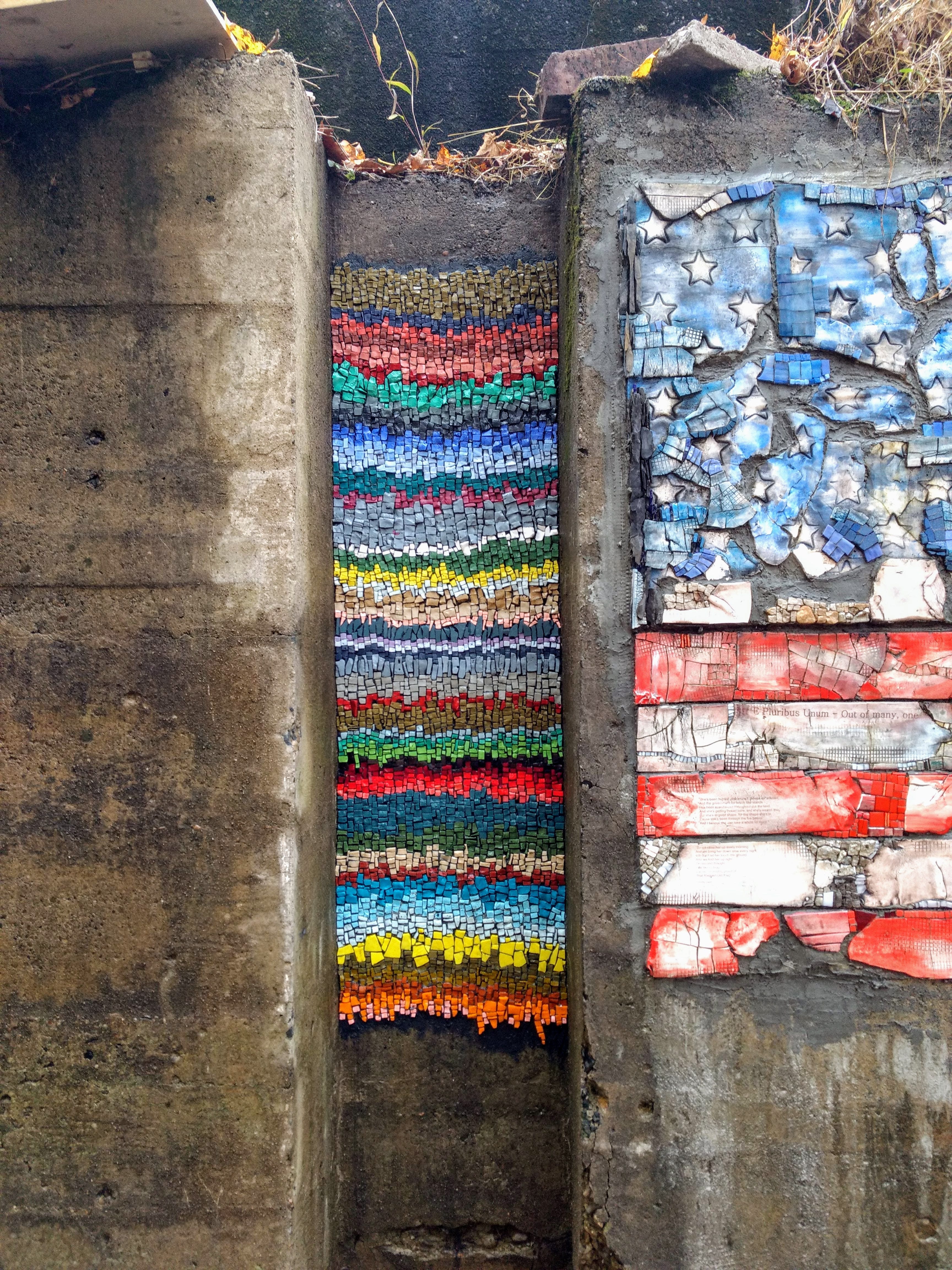
You can see Cantini’s smalti in The Ruins Venn. You can appreciate it in the fifty-two colors of my smalti color study next to The Ragged Old Flag. I called it Smuts’ Smalti for years because he was the unlikely messenger. But now I understand the older name inside the glass.
Before it came to me, before it came to The Ruins, it had already belonged to a Pittsburgh artist who knew how to place beauty in the path of ordinary people.
Smalti never loses its value. As long as it can avoid the landfill, it moves from hand to hand, confident in its own worth.
It just waits, while the people around it catch up.
The Smuts Brothers are still in business and they have my highest recommendation.
The Cantini mosaic has a great story that you can read here.
Keep an eye out for next week’s post. It will be FULL of announcements you won’t want to miss.
Thank you for being here with me as I keep digging for optimism.
Some days with a hammer, some days with a shovel. And some days with a pen.

Such a wonderful story, Rachel!
Wow! This is a story I'll go back to many times and share as I constantly share news of The Ruins. And I remember the Factory. I was there just one time and was in awe.